
What Is Secondary Steel? The Complete Buyer's Guide | Collier Metals

What Is Secondary Steel? The Complete Buyer's Guide

If you've spent any time sourcing steel coils, you've seen the term "secondary" — usually attached to a price that's noticeably lower than prime. But what does secondary steel actually mean? Is it defective? Is it safe? Can you use it for structural applications?

The short answer: secondary steel is first-quality steel that has been reclassified — usually for cosmetic or minor dimensional reasons — not because something is fundamentally wrong with it. For the right applications, it performs identically to prime material at a meaningful discount.

This guide explains exactly what secondary steel is, how it gets classified, what the different types look like, and how to evaluate whether it makes sense for your application.

What Makes Steel "Secondary"?

Steel is classified as secondary when it fails to meet a mill's prime quality standards at the time of production — or when it accumulates minor damage during storage, handling, or transport. The key word is "prime quality standards," which are often stricter than what most end-use applications actually require.

Mills produce steel to exacting tolerances for surface finish, dimensional accuracy, coating weight, and mechanical properties. When a coil falls outside any one of those tolerances — even slightly — it gets downgraded. That downgrade doesn't mean the steel is unsafe or structurally compromised. It means it doesn't meet the cosmetic or dimensional bar for prime certification.

Think of it this way: a galvanized steel coil with minor surface color variation is secondary. The zinc coating is intact. The mechanical properties meet or exceed ASTM specifications. A structural fabricator painting over the steel wouldn't notice the difference. But the mill can't sell it as prime, so it enters the secondary market at a discount.

How Steel Gets Classified as Secondary

Steel earns a secondary classification through several different paths, each with different implications for how the material performs and what applications it suits.

Classification Path What Happened Typical Impact on Performance
Surface Cosmetic Minor scratches, roll marks, staining, color variation None — cosmetic only
Dimensional Off-Spec Width, gauge, or camber outside prime tolerance None after processing — corrected through slitting or leveling
Coating Variation Galvanized coating weight inconsistency, spangling, dull appearance Usually none — full corrosion protection typically maintained
Chemistry Deviation Minor chemistry variation from target; mechanical properties still meet ASTM minimums None — properties verified by mechanical testing
Edge Defects Edge wave, edge cracks, sawtooth edges from rolling or handling None after slitting — defective edges removed through precision trim
Handling/Storage Damage Rust spots, storage stain, minor handling marks accumulated after production Minimal — depends on depth and extent; evaluate case by case
Structural Defects Cracks, lamination, holes — through-thickness integrity issues Significant — requires careful evaluation; may limit applications

The Main Categories of Secondary Steel

Secondary steel isn't one thing — it's a broad market category that spans everything from cosmetically imperfect galvanized coils to off-width master coils to material with genuine processing defects. Understanding which category you're looking at determines how you evaluate it and what you can do with it.

Excess and Surplus Steel

This is the cleanest category of secondary. Excess steel is prime-quality material that simply wasn't shipped — canceled orders, overproduction, inventory a service center or manufacturer needs to liquidate. The steel itself may be fully prime quality. It's called "secondary" only because it's moving through non-standard channels.

If you can get MTRs (mill test reports) and the material tests to spec, excess steel is essentially prime material at a secondary price. This is the category most buyers are happiest to find.

Cosmetically Off-Grade Steel

The largest category. This includes coils with surface imperfections that don't affect mechanical performance: scratches, roll marks, minor staining, coating color variation, dull galvanized appearance. The steel's yield strength, tensile strength, and elongation are unaffected. For applications that will be painted, powder coated, primed, or hidden from view, cosmetically off-grade steel is functionally identical to prime.

Dimensionally Off-Spec Steel

Steel that fell outside prime tolerances for width, gauge, or flatness. The most common example is a coil that came off the mill slightly wider or narrower than ordered. A service center with a slitting line can trim or re-slit the coil to precise width, producing usable slit coils at a lower material cost.

Similarly, steel with minor shape defects like edge wave, center buckle, or coil set can often be corrected through tension leveling, restoring flatness without affecting mechanical properties.

Steel with Edge Defects

Edge defects are among the most common reasons for secondary classification. Edge wave, edge cracks, sawtooth edges, and burrs are all problems that arise from rolling, slitting, or handling. The key insight: edge defects are localized to the edge of the coil. A precision slitting operation with automatic edge trim removes that material entirely, producing slit coils with clean, square edges and no trace of the original defect.

A 60-inch wide coil with 2 inches of edge wave on each side becomes a perfectly usable 56-inch coil — or multiple narrower slit coils — after processing.

Steel with Coating Defects

Galvanized and coated steel is frequently downgraded for coating imperfections: minor bare spots, dross pickup, ash staining, over-thick edges (spooled edges), flow lines, or crystalline patterns. Many of these are purely cosmetic and don't compromise corrosion protection. Some — like bare spots or pin holes — do require more careful evaluation, especially for outdoor or corrosive environments.

Key Takeaway: The vast majority of secondary steel coils are downgraded for cosmetic or minor dimensional reasons — not because the steel is structurally unsound. For hidden components, structural applications, and painted parts, the performance difference between secondary and prime is zero.

What Secondary Steel Is NOT

Misconceptions about secondary steel are common and worth addressing directly, because they cause buyers to leave real money on the table.

Secondary steel is not "defective" steel. The word "defect" in the steel industry refers to a specific classification of surface or structural irregularity — not a judgment about whether the material is usable. A scratch is technically a defect. It doesn't make the steel unusable.

Secondary steel is not weaker steel. Surface conditions like scratches, roll marks, staining, and minor coating variations have no measurable effect on yield strength, tensile strength, or elongation. These properties are set by the steel's chemistry and rolling process, not by what happened to its surface afterward.

Secondary steel is not untestable or uncertified. Reputable secondary steel suppliers can provide MTRs (mill test reports) on most material. For coils without original MTRs, mechanical testing — a tensile test pulled from the actual material — verifies that yield and tensile minimums are met. Secondary steel that has been mechanically tested and documented is fully certifiable for structural and code-compliant applications.

Secondary steel is not always low-grade steel. Some of the best value in the secondary market is high-strength steel — HSLA grades, higher-tensile material — that was downgraded for a cosmetic reason. The mechanical properties can exceed what prime A36 delivers, at a fraction of the cost.

Defect Type Examples Affects Strength? Verdict
Surface — Cosmetic Scratches, roll marks, pinch marks, staining, oil marks No Fine for structural, painted, or hidden applications
Surface — Scale Rolled-in scale, tiger scale, salt & pepper scale Rarely Fine for structural; use HRPO for painting or welding
Shape Defects Edge wave, center buckle, coil set, crossbow No Correctable through tension leveling or slitting
Edge Defects Edge cracks, edge wave, sawtooth, burrs At edges only Removed entirely through precision slitting with edge trim
Structural Defects Through-thickness cracks, lamination, holes Yes Requires careful evaluation; limits structural use

Who Uses Secondary Steel and Why

Secondary steel has a broad customer base that cuts across manufacturing, fabrication, and construction. The common thread: buyers who understand what they're buying and match the material to the application.

Structural Fabricators

Equipment bases, mezzanine frames, stair treads, mounting plates, bracing, and structural sub-assemblies are all applications where surface finish is irrelevant. The steel gets welded, primed, and painted. Secondary hot rolled or HRPO at a 15–25% discount over prime delivers identical structural performance.

HVAC Duct Fabricators

Commercial and industrial ductwork is a hidden application — galvanized steel that goes into walls, ceilings, and mechanical rooms where no one sees it. Secondary galvanized with minor coating variations or surface staining performs identically to prime for corrosion resistance and formability. High material volume makes the cost savings meaningful.

Agricultural Equipment Manufacturers

Farm equipment operates in harsh conditions and competes in a cost-sensitive market. Structural components, implement frames, and brackets are welded and painted. Secondary hot rolled or galvanized in heavier gauges — 7 gauge, 10 gauge, 3 gauge — is a natural fit.

Tube Mills

Tube mills running ERW (electric resistance welded) tube need consistent width and clean edges — not cosmetically perfect surfaces. Off-width master coils precision-slit to tube mill feedstock widths deliver exactly what the process requires, at secondary prices.

Service Centers and Processors

Secondary steel is raw material for service centers that run their own slitting or cut-to-length lines. Buying a wide secondary master coil and slitting it to customer specs is a common business model that passes savings down the supply chain.

Application Secondary Steel Fit Notes
Structural frames & equipment bases Excellent Painted/primed finish eliminates cosmetic concerns
HVAC ductwork Excellent Hidden application; galvanized coating integrity is what matters
Agricultural equipment Excellent Painted finish; secondary savings matter in competitive market
Tube mill feedstock Excellent Precision slit to width; surface less critical than edge quality
Heavy equipment frames Excellent Hidden, welded components; mechanical properties are all that matters
Trailer decking & flooring Good Evaluate surface condition for slip resistance requirements
Automotive exposed panels Not recommended Class A/B surface requirements; prime material required
Appliance exteriors Not recommended Exposed cosmetic finish; zero-defect surface required

How to Evaluate Secondary Steel Before You Buy

Not all secondary steel is the same, and evaluating it correctly determines whether you get a genuine bargain or a problem. Here's what to look for.

Understand the Reason for the Downgrade

The single most important question: why is this steel secondary? A coil downgraded for minor surface staining is very different from one with edge cracks or lamination. Reputable suppliers will tell you — and show you — the specific condition of the material.

Get the MTR or Request Mechanical Testing

For most secondary steel, original mill test reports are available. MTRs document the chemistry, yield strength, tensile strength, and elongation of each heat (production batch). If original MTRs aren't available, request that a tensile test be pulled from the coil. A coupon test verifying yield and tensile minimums is straightforward and inexpensive, and it gives you documented proof that the material meets the ASTM specification you're buying to.

Match the Defect to the Application

The defect profile of the coil should be evaluated against what your application actually requires. A cosmetic scratch is irrelevant on a steel base plate that will be welded and primed. An edge crack might be fine if you're slitting the coil and that section is removed anyway. Actual structural defects — lamination, through-thickness cracks — require a different level of scrutiny and may limit where the steel can be used.

Confirm Processing Capabilities

If the secondary classification is dimensional (off-width, out-of-flat), confirm the processor's capabilities before committing. Width tolerance matters for tube mills and precision forming. Flatness matters for laser cutting and blanking. Ask for specific tolerance claims, not just "we can slit it."

At Collier Metals, our 72-inch capacity slitting line holds ASTM width tolerance on slit coils — tight enough for tube mill feedstock and precision fabrication applications.

What Does Secondary Steel Cost?

Secondary steel pricing varies with the market, the material type, and the nature of the downgrade. As a general range, secondary trades at a discount of 10–30% below prime prices for comparable material. The discount is larger for cosmetic issues with no processing required, and smaller for off-spec material that requires slitting or leveling.

The savings become significant at scale. On a 40,000-pound structural project:

  • Prime A36 10-gauge at market pricing ~$20,000

  • Secondary A36 10-gauge at 20% discount ~$16,000

  • Savings: $3,000–$5,000 depending on market conditions

For project-based fabricators running consistent volume, the secondary market is one of the most reliable ways to manage material costs without sacrificing quality or lead time.

The Bottom Line on Secondary Steel

Secondary steel is a legitimate, well-established segment of the steel market that exists because mills apply prime certification standards that are tighter than most end-use applications require. The result is a large, consistent supply of high-quality steel that doesn't meet cosmetic or dimensional prime criteria — but performs identically to prime in the vast majority of applications.

The key is matching the material to the application and working with a supplier who can clearly explain why material was downgraded, verify mechanical properties, and process the coil to your specifications. When that happens, secondary steel isn't a compromise. It's the smarter buy.

At Collier Metals, secondary steel is our specialty. We source excess and secondary hot rolled, HRPO, and galvanized coils from domestic mills, provide mechanical testing documentation, and process material through our 72" slitting line to your exact width requirements. Minimum orders start at 5,000 lbs in select gauges.
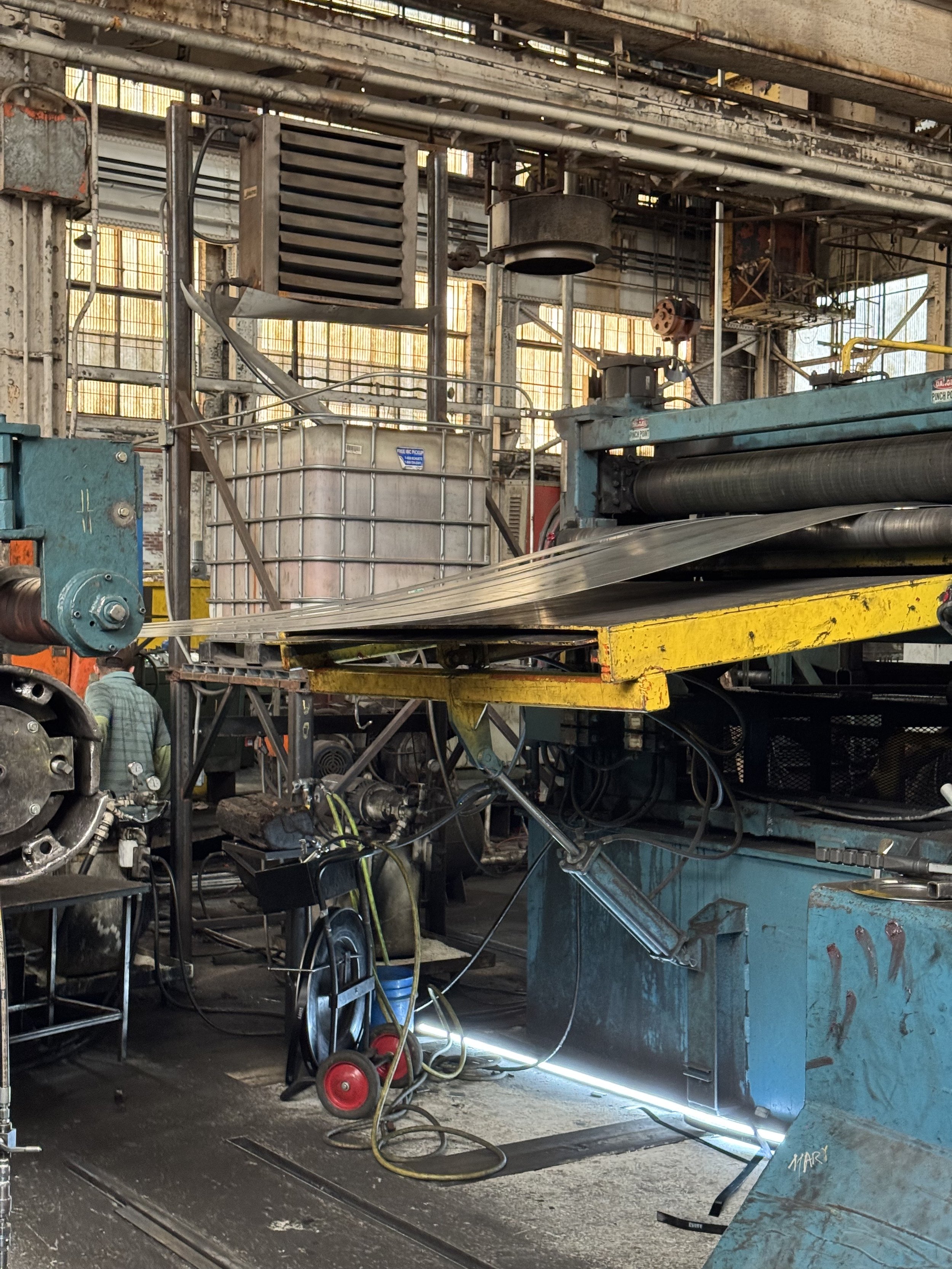
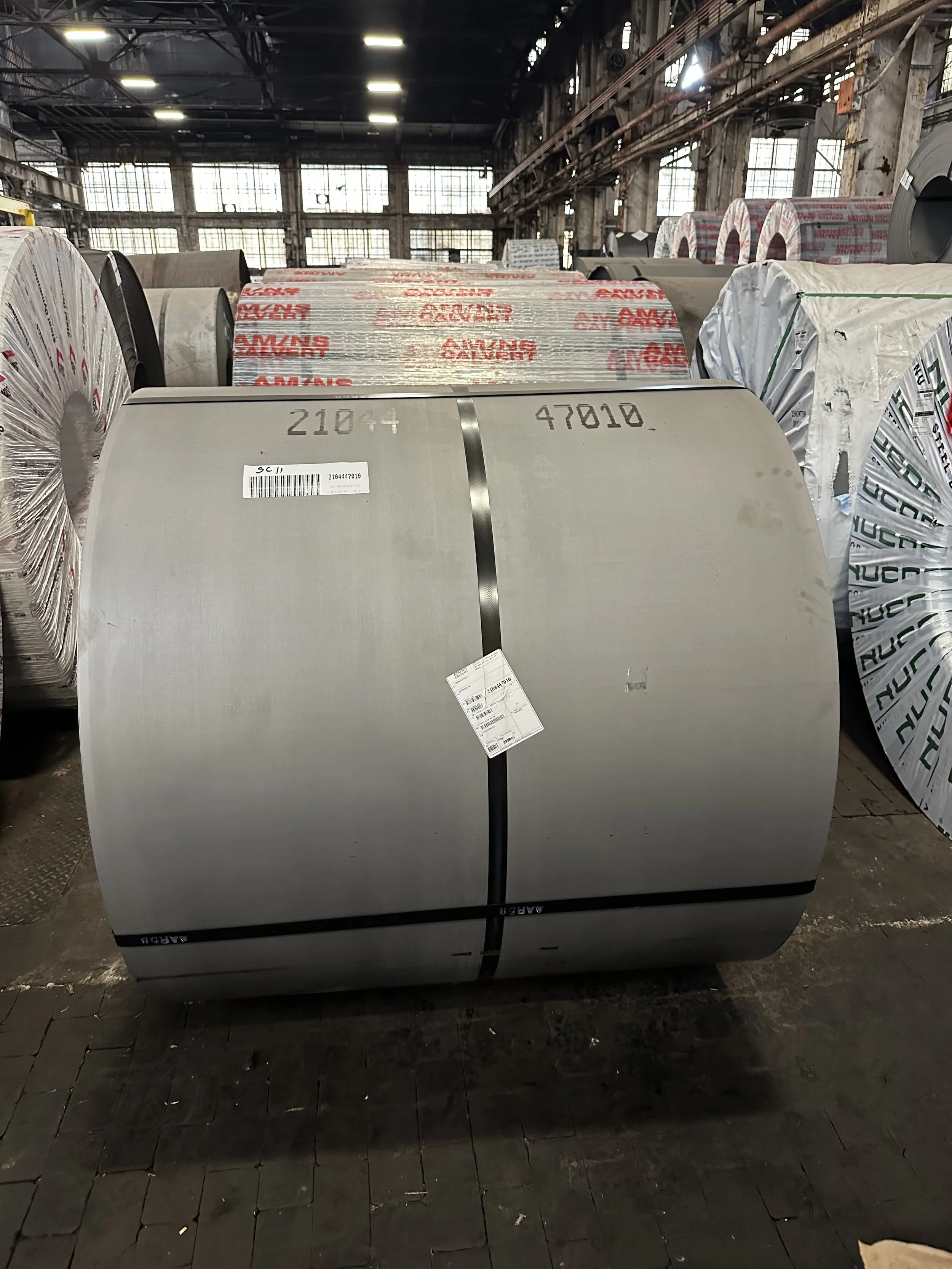
Secondary Steel for Structural Fabrication: When Cosmetics Don't Matter

Secondary Steel for Structural Fabrication: When Cosmetics Don't Matter

Collier Metals | Secondary Steel Education Series | 9 min read

Yes, secondary steel is suitable for structural use. Secondary steel meets the same ASTM specifications as prime material — same chemistry, same yield strength, same tensile strength, same elongation. The only difference is cosmetic: surface scratches, roll marks, staining, minor coating variations, or off-standard dimensions that the original buyer didn't want. None of those issues affect how steel performs under load.

For structural fabricators, this creates a significant opportunity. The majority of structural applications — equipment bases, mezzanine framing, stair treads, platforms, bracing, base plates — are welded, painted, enclosed, or otherwise hidden from view. Nobody inspects the surface finish of a mezzanine column after it's been primed, painted, and bolted into place. Yet many fabricators are paying prime prices for material going into exactly these applications.

This guide covers the engineering basis for using secondary steel in structural fabrication, which applications are ideal candidates, how to verify code compliance, and what kind of cost savings are realistic.

Why Secondary Steel Performs Identically to Prime in Structural Applications

Structural performance in steel is determined by three mechanical properties, all of which are set during steelmaking and rolling — not by what happens to the surface afterward:

  • Yield Strength — The stress at which the steel permanently deforms. This is the primary design value for structural engineers. A36 steel requires a minimum of 36 ksi regardless of whether the surface has scratches or staining.

  • Tensile Strength — The maximum stress before fracture. This provides the safety margin above yield. A36 requires 58–80 ksi tensile whether the coil is prime or secondary.

  • Elongation — How much the steel stretches before failure, indicating ductility. This matters for seismic design, energy absorption, and preventing brittle fracture. Secondary steel has the same elongation as prime because it's the same material.

These properties are intrinsic to the steel's chemistry and microstructure. A scratch on the surface doesn't change the carbon content. A roll mark doesn't alter the grain structure. An oil stain doesn't reduce the cross-sectional area carrying load. The steel under the surface imperfection is identical to prime steel at every level that affects structural performance.

Building Code Compliance: What You Need to Know

The most common concern fabricators raise about secondary steel is code compliance. Here's the straightforward answer: building codes and structural steel specifications don't distinguish between prime and secondary. They specify material properties.

ASTM Specifications Apply to the Steel, Not Its Cosmetic Grade

When a structural engineer specifies ASTM A36 on a drawing, they're requiring:

  • Minimum 36 ksi yield strength

  • 58–80 ksi tensile strength

  • Minimum 20% elongation (in 8″ for plates; verify for your specific thickness)

  • Defined chemical composition limits (carbon, manganese, phosphorus, sulfur, silicon)

A secondary steel coil that meets all of those requirements is fully compliant with A36 — period. The specification doesn't include a line item for "must not have roll marks" or "surface must be cosmetically perfect." It specifies chemistry and mechanical properties, both of which are verified through testing and documented on the mill test report.

Mill Test Reports Provide Full Traceability

Secondary steel comes with the same mill test reports (MTRs) as prime material. The MTR documents:

  • Heat number for traceability back to the specific melt

  • Chemical composition (actual values, not just specification limits)

  • Mechanical test results from the producing mill

  • ASTM specification compliance

  • Producing mill identification

When you buy secondary steel from a reputable source, the MTR follows the material. This gives you the same documentation chain that prime steel provides — the same paperwork your customers, inspectors, and quality systems require.

Supplemental Mechanical Testing Removes Any Doubt

Beyond the original MTR, secondary steel can be independently tested to re-verify mechanical properties. This is standard practice for quality-conscious secondary steel processors. The supplemental test results serve as a second confirmation that the material meets specification — giving you documented proof that goes beyond what most prime steel purchases include.

THE CODE COMPLIANCE BOTTOM LINE Building codes specify material properties — not cosmetic appearance. Secondary steel that meets ASTM A36 chemistry and mechanical requirements is A36, with the same MTR documentation and traceability as prime. Supplemental testing provides an additional layer of verification that most prime steel purchases never receive.

Ideal Structural Fabrication Applications for Secondary Steel

The best candidates for secondary steel share common characteristics: the finished parts are structural rather than decorative, they'll be painted or coated, and surface appearance is either hidden or irrelevant. Here are the applications where secondary steel delivers the biggest impact.

Equipment Bases and Mounting Plates

Equipment bases are one of the highest-volume structural applications for secondary steel. These heavy plates support machinery, HVAC units, generators, and industrial equipment. They're welded, drilled, painted or galvanized, and bolted to a floor. Nobody sees the surface finish after installation, and the only thing that matters is whether the plate can handle the design load. Secondary steel in A36 or A1011 HSLA handles that identically to prime.

Mezzanine Framing and Structural Platforms

Mezzanine structures are fabricated from beams, columns, bracing, and deck plates — all of which get welded together, primed, and painted. The structural members are hidden behind decking, handrails, and finishes. Surface scratches or roll marks on the raw steel are completely irrelevant once the structure is assembled and coated. This is an application where the 15–25% cost savings on secondary material drops directly to the bottom line on projects that consume significant tonnage.

Stair Treads, Platforms, and Grating Supports

Industrial stair treads and platforms are classic structural applications: they carry live loads, get welded to stringers, and receive a non-slip coating or tread pattern. These parts are designed to be functional, not decorative. Cosmetic surface defects like scratches, minor staining, or roll marks are invisible under the finished coating and have zero bearing on the tread's load rating.

Structural Bracing and Gusset Plates

Bracing members and gusset plates connect structural elements and transfer forces between them. They're hidden inside wall cavities, above ceilings, or behind cladding. The design requirement is yield strength and weld quality — not surface cosmetics. These are often cut from heavier gauge material where secondary steel availability is strong and savings are meaningful.

Trailer and Vehicle Frames

Trailer decking, frame components, and cross-members are high-volume structural applications. These parts endure heavy loads, vibration, and weather exposure — but they get primed, painted, or undercoated during manufacturing. The surface condition of the raw steel is irrelevant to the trailer's structural rating, and the cost savings on material accumulate fast when you're building frames in volume.

Base Plates for Columns and Machinery

Column base plates transfer structural loads into foundations. They're typically heavy gauge (7 gauge through 3 gauge or thicker), welded to columns, drilled for anchor bolts, and embedded in grout or concrete. After installation, nobody will ever see the base plate again. Specifying prime steel for a component that's going to be buried in concrete is paying for cosmetics that serve no purpose.

Guards, Enclosures, and Protective Covers

Machine guards, electrical enclosures, protective bollard plates, and equipment covers are structural in function but almost always painted or powder-coated. The coating covers any surface imperfections completely, and the design requirements are about impact resistance and load capacity — properties that secondary steel delivers identically to prime.

Secondary Steel Suitability by Application

This table summarizes which structural fabrication applications are strong candidates for secondary steel and why.

Application Typical Gauge Why Secondary Works Suitability
Equipment bases & mounting plates 7 ga – 3 ga Hidden after install; painted or galvanized Excellent
Mezzanine framing 10 ga – 3 ga Welded & painted; hidden behind finishes Excellent
Stair treads & platforms 11 ga – 7 ga Non-slip coating covers surface; load capacity is what counts Excellent
Bracing & gusset plates 10 ga – 3 ga Concealed inside assemblies; strength is the only spec Excellent
Trailer frames & decking 7 ga – 3 ga Primed & painted; high volume = big savings Excellent
Column base plates 7 ga – 3 ga Buried in grout/concrete after install Excellent
Guards & enclosures 11 ga – 7 ga Powder-coated or painted; function over form Excellent
Architectural exposed steel Varies Surface is final visible finish — cosmetics matter Case-by-Case

Why Surface Cosmetics Don't Affect Structural Performance

If you've read our guide on surface defects vs. structural defects in steel coils, you know that the vast majority of reasons steel gets classified as "secondary" are purely cosmetic. Here's a quick summary of the defect types that are common in secondary steel and completely irrelevant to structural fabrication:

Cosmetic Defects You'll See on Secondary Steel — and Can Ignore

  • Scratches and friction gouges — Shallow linear marks from handling and processing. They don't reduce the steel's cross-section or alter its properties. They disappear under primer.

  • Roll marks, roll bruises, and chatter marks — Surface impressions from mill equipment. These are texture variations, not material defects. They have no effect on yield or tensile strength.

  • Oil stains, rust spots, and acid staining — Discoloration from processing fluids or light surface oxidation. Standard blast cleaning or chemical prep before painting removes all of these. They don't affect the steel underneath.

  • Color variation and dull appearance — Common in galvanized secondary steel. The zinc coating is still there, still at spec weight, and still providing corrosion protection. The only difference is visual consistency.

  • Coil breaks — Narrow deformation lines from coiling tension. These are shape defects, not cracks. They don't reduce structural capacity, though they may show through thin paint on exposed surfaces — which is not a concern for structural fabrication.

  • Off-width or off-gauge — The original coil didn't meet the buyer's width or gauge specification, but the material itself is perfectly sound. Precision slitting corrects width issues, and as long as the actual thickness meets your design requirements, off-gauge material is fully usable.

Defects That Do Matter — and How They're Screened Out

Not every secondary coil is suitable for structural use. Responsible secondary steel suppliers screen for defects that genuinely affect structural integrity:

  • Through-thickness cracks (transverse, longitudinal) — These are stress concentrators that can propagate under load. Coils with these defects should be rejected for structural applications.

  • Lamination — Internal layer separation that reduces effective thickness. Not suitable for structural use.

  • Holes or severe material loss — Any defect that removes material from the cross-section reduces load capacity.

  • Severe inclusions — Large non-metallic inclusions can act as crack initiation sites under fatigue loading.

The key point: these defects are identified and excluded during the evaluation process. What reaches the fabricator is material with cosmetic imperfections only — mechanically sound steel that performs identically to prime.

THE PAINT TEST Here's a simple way to evaluate whether secondary steel works for your application: if the part will be painted, primed, powder-coated, galvanized, or otherwise coated before it reaches the end user, then cosmetic surface defects are irrelevant. The coating covers everything. You're paying a premium for appearance that will be hidden under the first coat of primer.

Cost Savings: What Secondary Steel Means for Structural Fabrication Budgets

Structural fabrication is a high-volume, cost-competitive business. Material cost is typically 40–60% of total project cost, which means even modest percentage savings on steel translate into significant dollar improvements on the bottom line.

Secondary steel for structural applications typically runs 15–25% below prime pricing, depending on the specific material, gauge, and market conditions. Here's what that looks like on a real project:

  • A single mezzanine project using 30 tons of A36 10 gauge — At a 20% discount, that's roughly $5,400 in material savings on one job, with zero compromise in structural performance.

  • A trailer manufacturer consuming 15 tons per week of 7 gauge — A 15% material cost reduction adds up to over $100,000 in annual savings, assuming typical market pricing.

  • An equipment fabricator using 5,000 lbs of 3 gauge base plate monthly — Even at smaller volumes, secondary material puts thousands of dollars back into the operation each year.

These savings don't come with trade-offs in performance, testing, or documentation. The steel meets the same spec. It comes with the same MTR. It's verified through the same (or more rigorous) testing. The only thing you're not paying for is cosmetic surface perfection that your application doesn't require.

Additional Advantages Beyond Price

Cost savings are the headline, but secondary steel offers other advantages that matter for structural fabricators:

  • Faster lead times. Prime mill orders typically run 4–8 weeks for domestic mills. Secondary steel is available in days to weeks because it's already produced and sitting in inventory. For fabricators juggling project schedules and change orders, fast material availability can be more valuable than the cost savings.

  • Smaller minimums. Mills require 40,000–50,000 lb minimum orders. Secondary steel is available in smaller quantities — as low as 5,000 lbs in specialty gauges. This means you can buy what you need for a specific project without tying up capital in excess inventory.

  • Processing included. Secondary steel from a service center with in-house slitting and leveling means the material arrives ready to fabricate. Edge defects are trimmed off. Shape issues are corrected. Width is slit to your specification. That eliminates a processing step and the logistics of coordinating with a separate slitter.

How Collier Metals Supplies Secondary Steel for Structural Fabrication

At Collier Metals, structural fabrication is one of the primary applications we serve with our secondary steel program. Here's what that looks like in practice:

  • Material sourcing: We source exclusively from domestic mills — Nucor, Cleveland-Cliffs, Steel Dynamics, and other major U.S. producers. All material meets ASTM specifications with full heat traceability.

  • Defect evaluation: Every coil is evaluated against our 150+ defect reference system. We categorize defects as cosmetic or structural, and material with genuine structural defects is excluded from inventory.

  • Mechanical testing: We test yield strength, tensile strength, and elongation to verify the material meets specification requirements.

  • Processing: Our 72" slitting line delivers material to ASTM Standard width tolerance. Tension leveling corrects shape defects like edge wave, center buckle, and coil set. The material you receive is flat, properly sized, and ready to fabricate.

  • Gauge range: We specialize in the heavy gauges structural fabricators need most — 11 gauge through 1/4” — with minimums as low as 5,000 lbs in specialty gauges.

  • Lead times: In-stock material ships in 3–5 days. Sourced material with processing is typically 8–15 days — a fraction of prime mill lead times.

Quick Decision Checklist: Is Secondary Steel Right for This Job?

Run through these five questions for any structural fabrication project. If you answer “yes” to three or more, secondary steel is a strong candidate.

Question If Yes
Will the part be painted, primed, powder-coated, or galvanized? ✓ Use secondary
Is the part hidden inside an assembly, behind cladding, or underground? ✓ Use secondary
Is the primary requirement structural strength rather than surface finish? ✓ Use secondary
Does the customer specification allow ASTM-compliant material (without requiring specific mill or “prime only” language)? ✓ Use secondary
Is material cost a significant factor in project competitiveness? ✓ Use secondary

The Bottom Line for Structural Fabricators

Structural fabrication is the single strongest use case for secondary steel. The parts are hidden, painted, or coated. The design requirements are mechanical, not cosmetic. The material volumes are high enough that 15–25% savings translate into real money. And the steel itself — verified through testing, documented with MTRs, compliant with ASTM specifications — performs identically to prime.

The fabricators who are winning bids in competitive markets aren't necessarily the ones with the lowest overhead or the fastest welders. Many of them are the ones who've figured out that specifying prime steel for hidden structural components is paying a premium for nothing. Secondary steel is one of the simplest ways to improve margins without changing anything about your fabrication process, quality standards, or end product.

Collier Metals stocks and processes secondary steel from domestic mills in the gauges structural fabricators use most. Every coil is evaluated, tested, and documented. Precision slitting and tension leveling deliver material that's ready to fabricate, with lead times measured in days instead of weeks.

Learn more about our secondary and excess steel program →

Surface Defects vs. Structural Defects in Steel Coils: What Actually Matters?

Collier Metals | Secondary Steel Education Series | 9 min read

Most surface defects do not affect steel strength. That single fact is the reason the secondary steel market exists—and the reason fabricators, manufacturers, and purchasing managers can save 10–20% on material costs without sacrificing performance. A scratch on a steel coil looks bad. A roll mark feels rough under your fingers. An oil stain makes you wonder if something went wrong at the mill. But none of those imperfections change the yield strength, tensile strength, or elongation of the steel underneath.

The distinction between cosmetic surface defects and true structural defects is one of the most important concepts in steel procurement. Understanding this difference helps you make smarter purchasing decisions, avoid overpaying for prime material when secondary steel would perform identically, and confidently specify materials for your applications.

This guide breaks down every major category of steel coil defects, separates the ones that are purely cosmetic from those that genuinely compromise structural integrity, and explains how mechanical testing verifies that secondary steel meets the same ASTM specifications as prime material.

Does Scratched or Stained Steel Have Less Strength?

No. Scratches, roll marks, staining, and most other surface imperfections are exactly that—surface-level issues. They affect appearance, not performance. Steel gets its mechanical properties—yield strength, tensile strength, and elongation—from its chemistry and the rolling process, not from the condition of its outer surface.

Think of it this way: a car with a scratched bumper still has the same engine, the same frame, and the same crash rating as the day it rolled off the lot. Steel works the same way. The mechanical properties are built into the material's cross-section, not its surface finish.

This is why steel mills classify coils with surface imperfections as "secondary" rather than scrapping them. The material is mechanically identical to prime steel—it just doesn't look as clean.

Surface Defects That Don't Affect Strength

The following defects are cosmetic only. They may affect appearance, coating adhesion, or suitability for exposed applications, but they do not reduce the steel's load-bearing capacity, yield strength, tensile strength, or ductility.

Scratches, Roll Marks, and Mechanical Surface Marks

These are the most common reasons steel coils get downgraded from prime to secondary. They include:

  • Scratches – Linear surface damage from contact during handling, transportation, or coil processing. Scratches are shallow and do not penetrate into the steel's cross-section.

  • Roll Marks – Repeating indentations transferred from mill rolls during the rolling process. These are impressions on the surface, not material loss.

  • Roll Bruise – Indented marks from handling damage, typically from coil-on-coil contact during storage or shipping.

  • Pinch Marks – Indentations from pinching during coil processing or handling equipment.

  • Chatter Marks – Periodic surface patterns caused by vibration in mill equipment. Purely cosmetic and often barely noticeable.

  • Friction Gouges – Longitudinal scratches caused by friction during processing. These are surface-level only.

None of these defects reduce the steel's cross-sectional area or alter its microstructure. A coil with roll marks has the same yield strength and tensile strength as an identical coil without them.

Staining and Discoloration

Staining is another frequent reason steel gets classified as secondary. These defects affect color or surface appearance but have zero impact on mechanical properties:

  • Oil Stains – Residue from processing oils that didn't get fully removed. Cleaned easily with solvent or burned off during welding or painting prep.

  • Rust Spots – Isolated surface oxidation from moisture exposure during storage. Light rust is removed through normal surface preparation.

  • Acid Staining – Discoloration from the pickling process. Affects color, not chemistry or strength.

  • Emulsion Stain / Wet Temper Stain – Residual marks from rolling fluids. Cosmetic only.

  • Annealing Stain – Discoloration from heat treatment. The annealing process itself is intentional—the stain is just a visual byproduct.

Color and Appearance Variations

These defects are common in galvanized and coated steel:

  • Color Variation – Inconsistent color across the coil surface. Does not affect zinc coating weight or corrosion protection.

  • Gloss Variation – Inconsistent surface sheen. Purely visual.

  • Dull Appearance – Lack of expected luster on the surface. No structural significance.

  • Grayness – Dull gray coating appearance on galvanized steel. The zinc is still there and still protecting.

  • Spangling Variation – Differences in the zinc crystal pattern on hot-dip galvanized. Sometimes actually desired for aesthetic effect.

> KEY TAKEAWAY If the steel will be painted, powder-coated, enclosed in a structure, or otherwise hidden from view, cosmetic surface defects are irrelevant. You're paying a premium for appearance that nobody will ever see.

Defects That Do Affect Structural Integrity

Not all defects are cosmetic. The following categories represent genuine concerns that can reduce load-bearing capacity, compromise formability, or cause failure in service. These defects affect the steel's cross-section, internal structure, or through-thickness integrity.

Cracks

Cracks are the most serious category of steel defects because they represent actual separations in the material that propagate under stress:

  • Transverse Cracks – Cracks running perpendicular to the rolling direction. These directly reduce the effective cross-section carrying load and can propagate rapidly under tension.

  • Longitudinal Cracks – Cracks running parallel to the rolling direction. Weaken the material along its length.

  • Edge Cracks (through-thickness) – When edge cracks extend through the full thickness of the material, they create stress concentration points that can lead to fracture during forming or in service. Note: shallow edge cracks confined to the edge zone can often be removed through slitting edge trim.

  • Surface Cracking – Widespread cracking on the steel surface indicates a more fundamental material problem, possibly from improper rolling temperatures or chemistry issues.

  • Weld Zone Cracking – Cracks in or near weld areas that compromise joint integrity.

Important distinction: Coil breaks (narrow, irregular deformation lines) look similar to cracks but are actually shape defects from improper coiling tension. They don't typically affect structural performance—though they can be cosmetically objectionable and may affect formability in precision stamping applications.

Lamination and Internal Separations

These defects occur within the steel's internal structure, making them particularly dangerous because they may not be visible on the surface:

  • Lamination – Internal layer separation within the steel caused by inclusions or gas pockets during casting. Reduces effective thickness and can cause delamination under load.

  • Edge Lamination – Separation at the edges that exposes internal layers. Can be partially addressed through edge trim, but the root cause may extend inward.

  • Delamination – Active separation of internal layers. Compromises through-thickness strength and makes the material unsuitable for structural applications.

Holes, Severe Pitting, and Material Loss

Any defect that removes material from the cross-section directly reduces load-carrying capacity:

  • Holes – Through-thickness openings in the steel. Obvious structural concern—eliminates material where load needs to transfer.

  • Severe Pockmarks – Deep, rough surface depressions that meaningfully reduce local thickness.

  • Over-Pickling – Excessive acid attack during descaling that thins the material beyond specification tolerance.

Severe Scale and Inclusion Defects

  • Severe Rolled-In Scale – When scale is deeply embedded during rolling, it creates discontinuities that act as stress concentrators. Light rolled-in scale is cosmetic; heavy rolled-in scale that creates pitting or voids is structural.

  • Inclusions – Non-metallic particles trapped in the steel during casting. Large inclusions create weak points that can initiate cracks under fatigue loading.

  • Slivers – Elongated surface tears or separations. Deep slivers that extend into the material's cross-section reduce effective thickness.

Quick Reference: Cosmetic vs. Structural Defects

Use this table to quickly assess whether a defect on a secondary steel coil is cosmetic only or a potential structural concern:

Defect Type Impact on Strength Application Guidance
Scratches None Acceptable for all structural and hidden applications
Roll Marks / Bruises None Acceptable for all structural and hidden applications
Staining (oil, rust spots, acid) None Acceptable for all applications; clean before painting
Color / Gloss Variation None Acceptable unless exposed Class A surface required
Coil Breaks Minimal OK for structural; may affect precision forming
Light Rolled-In Scale Minimal OK for structural; remove before painting/coating
Through-Thickness Cracks Significant Reject for structural use; evaluate for non-critical parts
Lamination Significant Reject for structural and forming applications
Holes / Severe Pitting Significant Reject — material loss reduces load capacity
Large Inclusions / Deep Slivers Moderate to Significant Evaluate case-by-case; reject for fatigue-loaded parts

How Mechanical Testing Verifies Strength Regardless of Appearance

The definitive way to confirm that surface defects haven't compromised a steel coil's performance is mechanical testing. This is standard practice for secondary steel and involves three key measurements:

  1. Yield Strength (ksi) – The stress at which steel permanently deforms. For ASTM A36, the minimum is 36 ksi. For ASTM A1011 SS Grade 40, it's 40 ksi. Secondary steel routinely meets or exceeds these minimums because the properties come from chemistry and processing—not surface condition.

  2. Tensile Strength (ksi) – The maximum stress the steel can withstand before fracturing. This determines the ultimate safety margin. Secondary steel with scratches or staining hits these same numbers because tensile strength is a bulk material property.

  3. Elongation (%) – How much the steel stretches before breaking, which indicates ductility and formability. This property is critical for fabricators who need to form, bend, or stamp the material.

When secondary steel is mechanically tested and the results show it meets ASTM specification minimums, you have documented proof that the material performs identically to prime. The mill test report (MTR) from the original production plus supplemental testing provides full traceability and specification compliance.

When Surface Finish Actually Matters: Applications to Consider

While surface defects don't affect strength, there are legitimate reasons to care about surface condition in certain applications:

  • Exposed architectural surfaces – Facades, decorative panels, and visible structural elements where appearance is part of the design specification. These typically require Class A or Class B surface quality.

  • Automotive exposed panels – Hoods, doors, fenders, and other body panels that will receive paint and be visible to the end consumer. These demand near-perfect surfaces.

  • Appliance exteriors – Refrigerators, ovens, and washing machines where the steel surface is the final visible product. Surface imperfections show through thin paint.

  • Precision forming operations – Deep drawing and complex stamping where surface imperfections could create stress risers during extreme deformation.

  • Coating adhesion requirements – Heavy rolled-in scale or contamination can prevent paint, powder coat, or plating from adhering properly. However, standard surface preparation (grinding, blasting, chemical prep) resolves most issues.

For everything else—structural fabrication, HVAC ductwork, equipment frames, tube mill feedstock, agricultural implements, mezzanine framing, base plates, hidden components, and any part that gets painted or enclosed—surface cosmetics simply don't matter.

The Real Cost of Specifying Prime When Secondary Would Work

Understanding the surface vs. structural distinction has direct financial implications. Consider a typical scenario:

Prime Steel Secondary Steel
Material: A36, 10 gauge $900/ton $720/ton
Project quantity: 20 tons $18,000 $14,400
Savings using secondary $3,600 (20%)
Yield strength 36 ksi min. 36 ksi min.
Tensile strength 58–80 ksi 58–80 ksi

Same specification. Same mechanical properties. Same ASTM compliance. The only difference is cosmetic surface condition—on material that’s going to be welded into a frame and painted.

Over the course of a year, fabricators processing 200+ tons of steel can redirect tens of thousands of dollars from material costs to other business needs simply by correctly identifying which applications truly require prime surface quality and which don’t.

A Practical Framework for Evaluating Secondary Steel Defects

When you receive a secondary steel coil or evaluate a potential purchase, use this three-step process:

  1. Identify the defect category. Is it a surface/cosmetic issue (scratches, staining, color variation) or a structural concern (cracks, lamination, holes)?

  2. Match against your application. Will the finished part be exposed or hidden? Structural or decorative? Painted or bare? If it's hidden and structural, cosmetic defects are irrelevant.

  3. Verify with testing. Request mechanical test results to confirm yield, tensile, and elongation meet your ASTM specification requirements. This eliminates uncertainty regardless of visual appearance.

This framework keeps the evaluation objective. Rather than rejecting steel because it doesn't look perfect, you're making decisions based on whether the material will actually perform in your specific application.

How Collier Metals Evaluates and Processes Secondary Steel

At Collier Metals, we evaluate every secondary coil against both cosmetic and structural criteria before it enters our inventory. Our process includes:

  • Visual inspection and defect identification using our comprehensive 150+ defect reference system to categorize every imperfection

  • Mechanical testing to verify yield strength, tensile strength, and elongation meet ASTM specification requirements

  • Processing to correct fixable defects – our precision slitting removes edge defects (edge wave, edge cracks, burrs, camber) to ±0.005" width tolerance. Our tension leveling corrects shape defects including edge wave, center buckle, and coil set.

  • Full documentation including original mill test reports, our certified mechanical test results, and as-processed dimensions for complete traceability

The result: secondary steel that's been verified, processed, and documented to perform identically to prime material—at a meaningful cost savings. We source exclusively from domestic mills, so all material meets U.S. ASTM specifications with full traceability.

The Bottom Line

Steel coil defects fall into two fundamentally different categories. Surface defects—scratches, roll marks, staining, color variations, and minor coating imperfections—are cosmetic issues that don't affect the mechanical properties that determine whether steel can do its job. Structural defects—cracks, lamination, holes, and severe material loss—are genuine concerns that require rejection or careful evaluation.

For the majority of fabrication, manufacturing, and construction applications, the steel's surface appearance is irrelevant to its performance. And that's the opportunity: by understanding which defects matter and which don't, you can source secondary steel that delivers the same mechanical performance at 10–20% less cost.

Ready to Source Secondary Steel? Collier Metals stocks and processes secondary steel from domestic mills in a wide range of gauges, with precision slitting, tension leveling, and mechanical testing included. We help you match the right material to your application—so you save money without compromising performance.

Excess Prime Steel Explained: High-Quality Steel Available at Competitive Prices

Excess Prime Steel Explained: High-Quality Steel Available at Competitive Prices

What is Excess Prime Steel?

Excess prime steel refers to prime quality steel products that, for various reasons, are available for sale outside of the original customer’s order. This steel meets the highest quality standards but may not precisely match the specifications of the initial purchase. Often, these situations arise when a customer reduces the size of their order after it has been processed by the mill, leaving the manufacturer with surplus prime steel ready to move.